
Gel Ice Packs Technical Parameters: A Model-by-Model Guide for Health & Medicine Cold Chain
Gel Ice Packs Technical Parameters: A Model-by-Model Guide for Health & Medicine Cold Chain
Model selection, not product category, is what decides whether a medical cold chain holds temperature. Jisi Cold Chain — Changzhou Jisi Cold Chain Technology Co., Ltd., a Changzhou-based manufacturer of gel ice packs, PCM ice plates, cooler boxes and vacuum insulated panels — serves health and medicine lanes through a defined model set: BH004 and BH125 for breast milk, BH011 and BH014 as mini packs, and BH162 as a cool bag PCM pack. This guide reads those models the way a cold chain engineer or procurement manager should: shell material, fill chemistry, temperature class, hold duration, dimensions, unit weight, documentation, and the commercial terms that surround them.
Most sourcing errors in this category are not material failures. They are parameter failures: a pack sized for a lunch bag used in a 48-hour pharmaceutical lane, a gel-filled brick specified where a phase change material plate was needed, or certificate documentation that never named the model actually ordered. This article deals with the parameters themselves — what each specification line means, which lines are model-level, and which lines must be confirmed in writing before a purchase order is released.
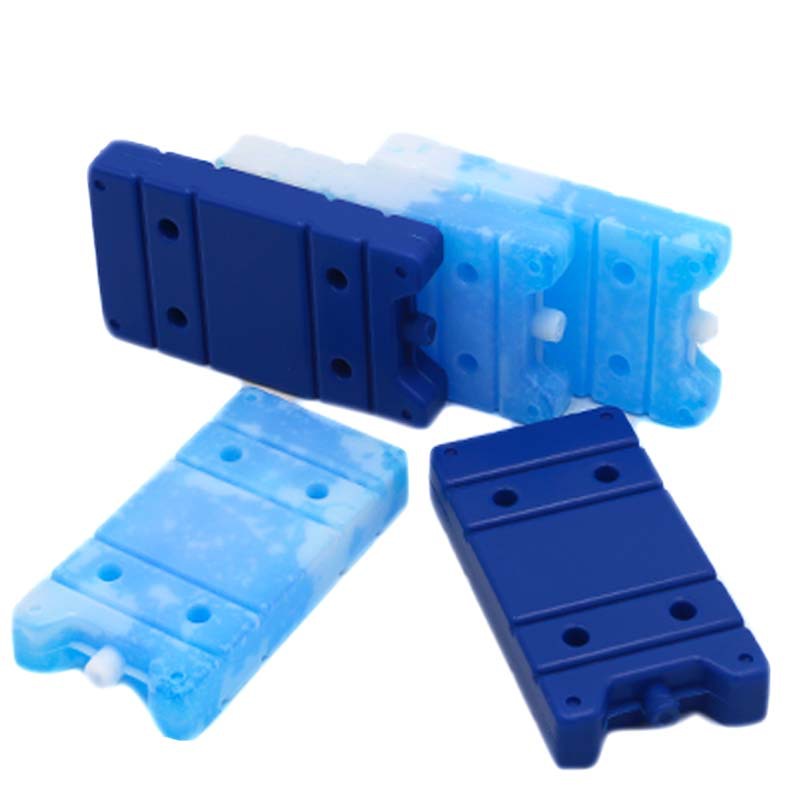
A single reusable gel ice pack format. What changes between models is the shell, the fill, the temperature class and the quantity of fill mass — not the appearance.
The Real Problem: A Gel Ice Pack Is Not a Specification
A buyer searching for “gel ice packs” reaches hundreds of products that look identical in a photograph and behave completely differently in a validated shipping lane. Two packs of the same outer footprint can differ in fill chemistry, nominal phase-change behaviour, usable hold duration and documented compliance. Once those variables are treated as one interchangeable commodity, the specification collapses.
Health and medicine cold chains expose that collapse quickly, because the acceptance criteria are numeric. WHO PQS documentation for vaccine cold boxes (E004/CB01.3) sets a requirement of maintaining 2–8 °C for at least 48 hours under 43 °C ambient temperature. A pack without a stated temperature class and a stated hold duration cannot be evaluated against a requirement of that kind at all — it can only be purchased on price.
Three specific failure patterns recur:
- Temperature class mismatch. A pack conditioned for a freezer lane is placed in a 2–8 °C refrigerated lane, and drifts the payload below the lower acceptance limit rather than above the upper one.
- Hold duration assumed, not stated. Reported durations in the Jisi range run from 12 to 120 hours depending on configuration and insulated system; a buyer who assumes the long figure on a short-format pack has no defence at audit.
- Documentation that does not name the model. A material report exists, but it does not identify the model, the shell resin or the fill formulation actually shipped.
Industry Background: Why Reusable Formats and PCM Now Set the Baseline
Reusable gel ice packs are projected to hold a 56.6% share of the gel pack market in 2026, according to The Business Research Company’s gel ice pack market report, and the same commercial research places the total gel ice pack market at USD 14.56 billion in 2025, projected to reach USD 29.98 billion by 2030. Whatever the precise boundary of that category, the direction is unambiguous: reusable, refreezable formats dominate procurement, and the comparison has shifted from unit price to refreeze cycles, replacement cost and documentation durability.
That shift changes what a parameter sheet has to contain. A disposable pack is judged once. A reusable pack is judged over its service life, which means the shell material, the seal integrity of the fill, and the stability of the gel or phase change material become commercial variables, not just technical ones.
Regulatory context for medical lanes has also become more explicit in buyer questionnaires:
- WHO PQS performance requirements for vaccine cold boxes define 2–8 °C cold life under high ambient conditions — the benchmark that makes hold duration a procurement number rather than a marketing phrase.
- FDA product classification under 21 CFR Part 890 covers physical medicine devices, which includes hot and cold packs. The classification entry alone does not establish that a specific gel ice pack is a regulated medical device in a given market — that determination belongs with the buyer’s regulatory team and the intended use.
- EU 10/2011 governs plastic materials and articles intended to come into contact with food, which is directly relevant where a pack shares a cavity with food or with a food-contact carrier.
- CPSIA documentation is referenced in the Jisi range for the US consumer product safety context, and CE marking where EU market access applies.
Jisi operates a 40,000 m² factory in Changzhou, Jiangsu, with a 4-person R&D team, a 70% export ratio and principal markets in North America, South America, Western Europe, Eastern Europe, Eastern Asia and Southeast Asia. The company was established in 2013, following the original Changzhou Yang Tao Plastic Products business founded in 2006 that specialised in food plastic packaging. Its product scope covers gel ice packs, ice bricks, PCM ice plates, cooler boxes and vacuum insulated panels — which is why a pack is usually specified together with the box or bag it sits inside, not in isolation.
How to Read a Jisi Gel Ice Pack Parameter Sheet
Five parameter families determine whether a model fits a lane. Read them in this order, because each one constrains the next.
1. Shell: Food Grade HDPE
The outer shell across the reusable range is HDPE — high-density polyethylene — described by the manufacturer as non-toxic and food grade. Practically, a rigid HDPE shell is what makes a pack reusable and compression-resistant in a packed cooler box, and it is also the component that determines whether the pack can be cleaned and returned to service.
What to verify: that the food-contact documentation names the shell resin and the model, and that wall thickness is adequate for the temperature class. A shell that becomes brittle at −25 °C is a different procurement decision from one used at 2–8 °C, even though both are labelled HDPE.
2. Fill: Cooling Gel, SAP, CMC, or PCM
The internal fill is where most of the thermal behaviour lives. Jisi states that the internal liquid may be SAP or CMC, and that PCM fills are used in the phase change range.
- SAP (super absorbent polymer) holds water inside a gel matrix, giving a mouldable, leak-resistant fill for general refrigeration and frozen support.
- CMC (carboxymethyl cellulose) is a cellulose-derived thickener producing a stable gel with different viscosity and freeze behaviour from SAP.
- Cooling gel is the general term for the refreezable fill used across the standard pack range.
- PCM (phase change material) absorbs or releases latent heat at a defined phase-change temperature, holding a temperature band rather than drifting through it. This is the fill used in the PCM ice plate and cool bag PCM pack range.
The selection rule is simple: gel and SAP/CMC fills suit general refrigeration, frozen support and cooler bag duty; PCM suits narrow-band medical lanes where the payload has to sit at a defined temperature — commonly the 2–8 °C band — for a defined duration.
3. Temperature Class and Hold Duration
Jisi lists PCM temperature grades at −30 °C, −25 °C, −15 °C, −10 °C, −5 °C, 0 °C, 2–8 °C, 18 °C and 23 °C. In insulated systems the company reports hold durations of 12, 24, 48, 72, 96 and up to 120 hours.
These are two separate numbers and must be treated as such. The temperature class defines where the pack sits; the hold duration defines how long the system stays inside the acceptance window. The duration is a property of the pack plus the cooler box or bag, plus payload and ambient conditions — not of the pack alone. Jisi reports insulation durations of 72 and 96 hours for certain insulated boxes, and those figures are configuration-dependent. Ask for the test conditions: payload, ambient temperature, starting temperature and acceptance limits.
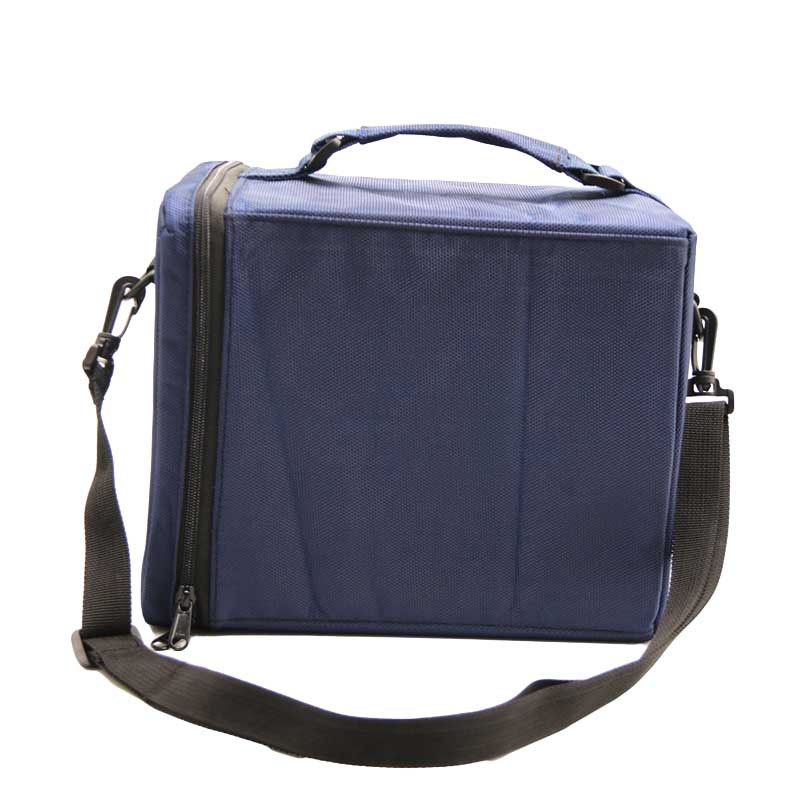
Medical cold chain equipment such as hospital circulation boxes and reagent transport incubators is specified together with the pack, because hold duration belongs to the system, not to the pack alone.
4. Dimensions, Unit Weight and Fill Mass
Physical parameters look administrative until a shipment fails. Four numbers matter:
- External dimensions — whether the pack fits the cavity of the cooler box, cool bag, lunch bag or medical cool box without displacing payload.
- Unit weight — freight cost, manual handling, and the number of packs a courier will accept per parcel.
- Fill mass — the single strongest driver of usable hold time within a given format.
- Pack count per carton — the bridge between the specification and the landed cost.
These are model-level values, issued on the model drawing and confirmed at quotation, because they change with format and fill volume. Treat them as the third screening gate, after temperature class and fill chemistry.
5. Documentation: FDA, SGS, MSDS, CPSIA, CE, EU 10/2011
Documentation is a parameter in its own right in medical procurement, because a tender can be lost on a missing sheet rather than on a failed test. The documentation set referenced across the Jisi range includes FDA, SGS, MSDS, CPSIA, CE and EU 10/2011.
| Document | What it evidences | What to confirm before ordering |
|---|---|---|
| FDA | US regulatory reference; 21 CFR Part 890 covers physical medicine devices including hot and cold packs | Whether the document covers the exact model and intended use, and whether the buyer’s market treats the product as a device or as packaging |
| SGS | Third-party testing documentation | Test scope, method and the model tested |
| MSDS | Material safety data for the fill and shell | That the formulation on the sheet matches the ordered fill (SAP, CMC or PCM) |
| CPSIA | US consumer product safety documentation | Applicability to the specific end use and market |
| CE | EU conformity reference where applicable | The applicable directive and the model covered |
| EU 10/2011 | Framework for plastic materials in contact with food | Relevance where the pack shares a cavity with food or food-contact carriers |
Model-by-Model: BH004, BH125, BH011, BH014 and BH162
Each model below is described by the parameters that are fixed by the manufacturer and the parameters that must be confirmed on the model drawing or quotation. Nothing here substitutes for the issued datasheet — it tells you which questions the datasheet has to answer.
BH004 — Breast Milk Gel Ice Pack
BH004 belongs to the breast milk cold chain group, used to hold expressed milk inside an insulated bag or box during transport. The parameters that decide fit are fill chemistry, format and the temperature class appropriate to the milk-chilling lane.
- Shell: Food grade HDPE
- Fill: Cooling gel — SAP or CMC
- Temperature class: Fixed per model from the listed grade set; confirm against the milk-chilling lane at quotation
- Format role: Breast milk transport in insulated bags and boxes
- Documentation: FDA, SGS, MSDS; CPSIA, CE and EU 10/2011 per program requirement
- Confirm at quotation: external dimensions, unit weight, fill mass, carton pack count
A common specification error with breast milk packs is buying on volume of milk rather than on cavity fit. If BH004 does not sit flat against the payload in the carrier, the effective hold time drops regardless of the pack’s nominal class.
BH125 — Breast Milk Gel Ice Pack, Second Format
BH125 sits alongside BH004 in the breast milk range and is selected where a different format suits the carrier or the shipment profile better. The parameter logic is identical; the format is not.
- Shell: Food grade HDPE
- Fill: Cooling gel — SAP or CMC
- Temperature class: Fixed per model from the listed grade set; confirm at quotation
- Format role: Breast milk and small-volume biological sample transport
- Documentation: FDA, SGS, MSDS; CPSIA, CE and EU 10/2011 per program requirement
- Confirm at quotation: external dimensions, unit weight, fill mass, carton pack count
Where a buyer is choosing between BH004 and BH125, the deciding variables are the internal cavity of the insulated bag or box, the number of milk containers per shipment, and the number of packs needed to surround the payload rather than sit beside it.
BH011 and BH014 — Mini Ice Packs
The mini formats serve small cavities: lunch bags, diagnostic and reagent kits, sample shippers and compact cooler compartments. Mini packs are a volume story, not a duration story — a small fill mass cannot deliver the hold time of a full-format pack, so the number of packs, not the size of one pack, becomes the design variable.
- Shell: Food grade HDPE
- Fill: Cooling gel — SAP or CMC
- Temperature class: Fixed per model from the listed grade set; confirm at quotation
- Format role: Mini ice packs for lunch bags, diagnostic kits and compact insulated compartments
- Documentation: FDA, SGS, MSDS; CPSIA, CE and EU 10/2011 per program requirement
- Confirm at quotation: external dimensions, unit weight, fill mass, carton pack count
BH011 and BH014 are the models to specify when the constraint is space, not cold mass. Buyers running a small-cavity lane should calculate pack count from the target hold time and the measured cavity, then confirm the count against a sample shipment.
BH162 — Cool Bag PCM Ice Pack
BH162 is the PCM model in the cool bag group. PCM changes the selection logic, because the fill is chosen for a phase-change temperature rather than for general refrigeration. Jisi lists PCM grades from −30 °C to 23 °C, so BH162 is specified by naming the phase-change grade required by the lane.
- Shell: Food grade HDPE
- Fill: PCM — phase change material
- Temperature class: Selected from the listed PCM grades (−30, −25, −15, −10, −5, 0, 2–8, 18 and 23 °C)
- Format role: Cool bag and cooler box duty in narrow-band medical lanes
- Documentation: FDA, SGS, MSDS; CPSIA, CE and EU 10/2011 per program requirement
- Confirm at quotation: phase-change grade, external dimensions, unit weight, fill mass, carton pack count
The 2–8 °C grade is the one most often requested for refrigerated pharmaceutical and vaccine-adjacent lanes, because it aligns the pack with the band the payload must hold. The exact grade, and the hold time achieved with a given cooler box, has to be confirmed as a system figure.
Step-by-Step: Matching a Model to a Medical Lane
A disciplined six-step sequence removes most of the risk from a gel ice pack order, and it works for BH004, BH125, BH011, BH014 and BH162 alike.
- Fix the temperature band and the acceptance limits. Write down the upper and lower limits and the duration the payload must stay inside them. For a 2–8 °C vaccine lane, the WHO PQS reference figure of at least 48 hours under 43 °C ambient is the standard to test against.
- Choose the fill chemistry. SAP or CMC gel for refrigeration, frozen support and general cooler bag duty; PCM where a narrow band and a defined hold time are required. This decision selects between the standard models and BH162.
- Size the format against the cavity. Measure the internal space of the cooler box, cool bag, lunch bag or medical cool box. Confirm external dimensions, unit weight and fill mass on the model drawing, then calculate how many packs fit around the payload.
- Confirm the shell and documentation. Verify that the Food Grade HDPE shell is appropriate to the temperature class, and that the FDA, SGS, MSDS and — where applicable — CPSIA, CE and EU 10/2011 documents name the model and formulation ordered.
- Validate with samples and a pre-shipment test. Run a physical shipment at the real ambient conditions before scaling. Pre-shipment testing is the stated acceptance criterion in the Jisi purchasing terms, and it is the cheapest point at which a parameter error is still recoverable.
- Lock the commercial terms. Confirm MOQ, carton packing, printing method, delivery term and payment method in writing. Only then release volume.
Where Each Model Fits: Use Cases
Cold Chain Transportation and Medical Cool Boxes
For insulated shipping of pharmaceuticals, reagents and clinical samples, the pack is one component of a system that includes a medical cooler box or vaccine cooler box, often with vacuum insulated panels. Longer lanes call for PCM plates or low-temperature eutectic cold plates at −30 °C to −15 °C; 2–8 °C lanes call for the PCM grade matched to the band. Jisi reports insulation durations of 12, 24, 48, 72, 96 and up to 120 hours across insulated systems, and 72 and 96 hours specifically for certain insulated boxes — all configuration-dependent figures that should be confirmed with test data.
Cooler Bags and Insulated Bags
BH162 as a cool bag PCM pack is the narrow-band option for insulated bags. Standard gel models work where the journey is short and the ambient exposure is moderate. The bag determines the result as much as the pack: an uninsulated bag will exhaust any pack.
Breast Milk Transport
BH004 and BH125 cover breast milk logistics, where the payload is small, frequently handled, and often moved in a personal carrier rather than a commercial box. Format fit and pack count matter more than maximum hold time.
Lunch Bags and Small-Cavity Duty
BH011 and BH014 mini packs serve lunch bags, compact coolers and small diagnostic kits. The same formats appear in food keep-fresh applications where a small reusable ice brick is sufficient.
Food Keep Fresh and General Refrigeration
Standard gel ice packs and ice cooler bricks remain the workhorse for food keep-fresh transport. Where the pack may contact food directly, EU 10/2011 relevance and the food grade HDPE shell become the documentation questions rather than thermal ones.
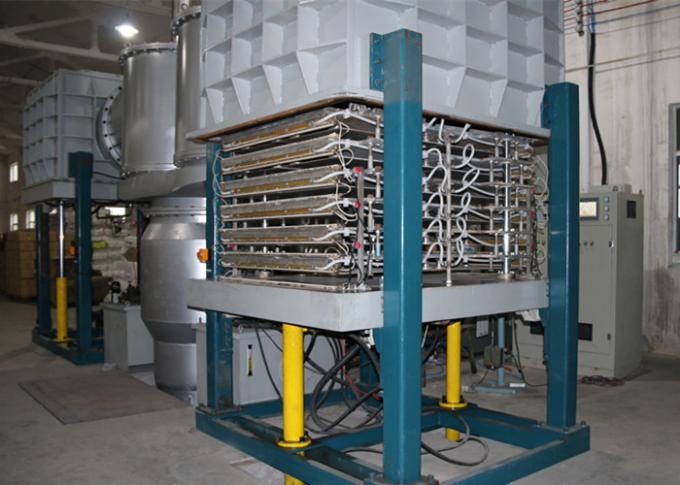
Production equipment at the Changzhou facility. Jisi reports a monthly production capacity of 10,000 units and a quality control process based on 100% testing.
Model Comparison: Parameters Side by Side
The table below compares the five models on the parameters that are fixed by the manufacturer. Fields marked as confirmed at quotation are model-level values issued on the drawing — they are not omitted because they are unimportant, but because they change with format and fill volume and must be taken from the current datasheet rather than from a general guide.
| Model | Format role | Shell | Fill | Temperature class | Primary scenario |
|---|---|---|---|---|---|
| BH004 | Breast milk pack | Food grade HDPE | Cooling gel — SAP or CMC | Fixed per model from listed grades; confirm at quotation | Breast milk transport in insulated bags and boxes |
| BH125 | Breast milk pack, second format | Food grade HDPE | Cooling gel — SAP or CMC | Fixed per model from listed grades; confirm at quotation | Breast milk and small-volume sample transport |
| BH011 | Mini pack | Food grade HDPE | Cooling gel — SAP or CMC | Fixed per model from listed grades; confirm at quotation | Lunch bags, compact coolers, diagnostic kits |
| BH014 | Mini pack, second format | Food grade HDPE | Cooling gel — SAP or CMC | Fixed per model from listed grades; confirm at quotation | Small-cavity medical and food keep-fresh duty |
| BH162 | Cool bag PCM pack | Food grade HDPE | PCM — phase change material | PCM grade selected from −30 °C to 23 °C | Narrow-band refrigerated lanes in cool bags and boxes |
Two readings of this table matter commercially. First, four of the five models share a common shell and fill family, which simplifies catalogues and inventory for distributors. Second, only BH162 changes the fill chemistry, which is why PCM and gel should be evaluated as two procurement paths rather than as one product line with options.
Commercial Parameters: MOQ, Lead Time, Payment and Customization
Technical parameters decide whether a model works; commercial parameters decide whether a program is sustainable. Jisi reports a monthly production capacity of 10,000 units with a quality control process based on 100% testing — a figure that matters most when a buyer is planning repeat shipments rather than a single order.
Minimum Order Quantity
The purchasing terms recorded for the range list an MOQ of 1,000 pcs. The company’s general FAQ is more specific about order type: where the buyer accepts an existing model, MOQ is usually 3,000 pcs; where a new model must be created, it is better above 5,000 pcs. Buyers should confirm which figure applies to the specific model and whether printing changes it.
Customization
Colour can be produced to a PANTONE code or to a supplied sample, subject to quantity. Printing options are silk screen printing, offset printing, or a sticker applied to the pack. A 4-person R&D team supports new model development, which is the route to a format that does not yet exist in the catalogue.
Packing, Delivery and Payment
Standard packing is carton, with other methods available on request. Delivery terms are FOB or CIF. Payment methods accepted include T/T, PayPal, Western Union, and — for established relationships — D/P, D/A and L/T. Acceptance criteria are pre-shipment test.
Cost Position
Jisi’s own comparison data records a cost position approximately 10% lower than conventional ice packs, alongside reusability, no maintenance requirement and a lower replacement cost. That comparison is supplier-reported and should be tested against the buyer’s own landed-cost model, particularly where freight weight and pack count per carton differ between options.
Frequently Asked Questions
Which compliance documents should a health and medicine buyer request for Jisi gel ice packs?
Request the documents that name the exact model and formulation. Across the Jisi range the referenced set includes FDA, SGS, MSDS, CPSIA, CE and EU 10/2011. The materials themselves are described by the manufacturer as non-toxic and food grade, with an HDPE outer shell and SAP or CMC internal fill; MSDS documentation should match the fill actually ordered. Two cautions apply. FDA product classification under 21 CFR Part 890 covers physical medicine devices including hot and cold packs, but the classification entry does not by itself establish that a specific gel ice pack is a regulated device in your market. And EU 10/2011 is relevant where the pack contacts food or sits in a food-contact carrier, so confirm applicability with your compliance team rather than assuming it.
Can BH004, BH125, BH011, BH014 and BH162 be customized?
Yes, within the stated parameters. Colour can be produced to a PANTONE code or to your sample, depending on quantity. Printing can be silk screen, offset, or a sticker applied to the pack, selected according to your artwork. New formats can be developed by the 4-person R&D team, which is relevant where none of the existing breast milk, mini or cool bag PCM formats fits the cavity. The constraint is volume, not capability: new model development is best supported above 5,000 pcs, and production capacity is reported at 10,000 units per month with 100% testing.
What drives the unit cost of a gel ice pack model?
Four factors dominate. Fill chemistry is the first — a PCM pack is a different cost structure from an SAP or CMC gel pack. Fill mass is the second, because it drives both material and freight weight. Printing is the third, since silk screen, offset and sticker options carry different setup costs. Volume is the fourth: MOQ is listed at 1,000 pcs in the purchasing terms, while the general FAQ notes 3,000 pcs for existing models and above 5,000 pcs for new model development. Jisi’s own comparison data records a cost position roughly 10% lower than conventional ice packs, with reusability and no maintenance requirement reducing replacement cost over the service life — a supplier-reported position worth validating against your landed-cost model.
Can I get samples before committing to a model?
Yes. Where you accept an existing model and do not require printing, free samples can be supplied, with the freight paid by the buyer. Sampling is the correct stage to test cavity fit, pack count and the temperature class against a real shipment, because dimensions, unit weight and fill mass are model-level values that only become meaningful in the carrier you intend to use. Pre-shipment testing is also the stated acceptance criterion in the purchasing terms, so a sample round and a pre-shipment test together give you a documented basis for volume release.
What lead time and capacity can a long-term medical cold chain program expect?
Jisi reports a monthly production capacity of 10,000 units with a quality control process based on 100% testing, which is the figure to plan repeat shipments around. Confirm the lead time for your specific model and printing method at quotation, since it varies with format and artwork. Delivery terms are FOB or CIF, payment methods include T/T, PayPal, Western Union and — for established relationships — D/P, D/A and L/T, and standard packing is carton with alternatives on request. For a multi-year program, the practical next step is to request a model-level quotation and a sample of the specific model, then run a pre-shipment test before committing volume.
Conclusion
Gel ice packs are specified at model level or not specified at all. The five parameters that carry the decision — Food Grade HDPE shell, SAP or CMC versus PCM fill, temperature class, hold duration, and dimensions with unit weight — are the same five that appear in an audit, a tender response and a failed shipment investigation. BH004 and BH125 handle breast milk, BH011 and BH014 cover small cavities, and BH162 brings phase change material into cool bag duty with grades from −30 °C to 23 °C.
The discipline is to fix the temperature band first, choose the fill chemistry second, size the format against the measured cavity third, and only then discuss MOQ and price. Buyers who follow that order end up comparing models; buyers who skip it end up comparing photographs.
Next Step: Sample, Datasheet or Quotation
Request the model datasheet for BH004, BH125, BH011, BH014 or BH162, order a free sample of an existing model (freight paid by the buyer), or send your temperature band and cavity dimensions for a model-level quotation and pre-shipment test plan.
Contact: Ying | Email: ying@czjmjs.com | WhatsApp
Factory: NO.9 Chuangye Road, Henglin Town, Changzhou City, Jiangsu Province, China
Website: www.cooler-icepacks.com
Download the Jisi Cold Chain product brochure (PDF)
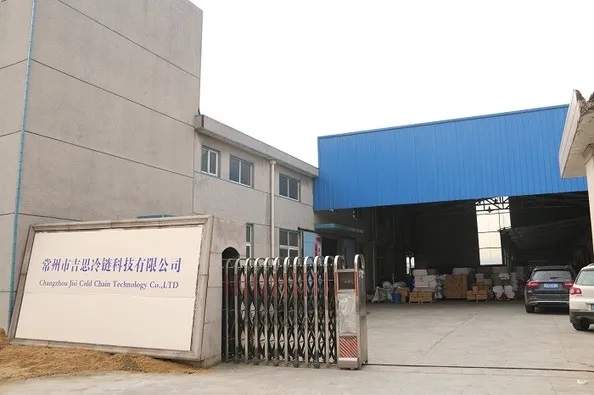
Jisi Cold Chain, Changzhou, Jiangsu — the manufacturing site behind the BH and PCM model range.
Have Questions or Need More Details?
Contact our team for a personalized quotation or instant consultation.
Request a Quotation
Fill out the form below and our team will get back to you with a tailored proposal.
WhatsApp Direct Chat
Prefer to chat in real-time? Message us on WhatsApp for instant assistance & quick answers.
- Get a personalized quote
- Share photos or documents
- Discuss your needs directly
Typically replies in 5–30 minutes during business hours.