
Gel Ice Packs vs. Ice Bricks: A Decision Comparison for Medical Cold Chain Buyers
Gel ice packs and ice bricks (also called ice blocks or large-format ice packs) are both reusable cold chain refrigerants, but they serve different temperature control roles. For medical cold chain buyers, the choice is not about which is “better” in general — it is about which format meets your specific temperature endurance, packaging, and cost requirements. This article provides a side-by-side decision comparison based on product characteristics and cold chain logistics requirements.
The Core Question Buyers Face
When procurement teams evaluate cold chain refrigerants, the fundamental question is: What internal temperature must be maintained, and for how long? The answer determines whether a standard gel ice pack, an ice brick, or a phase change material (PCM) ice plate is the appropriate solution. A mismatch between the refrigerant type and the shipment profile creates temperature excursions, product loss, and compliance risk.
For medical cold chain, regulated products such as vaccines, biologics, and diagnostic specimens often require controlled temperature ranges (for example, 2–8°C) rather than simply “as cold as possible.” That requirement changes the selection logic.
Understanding the Formats: Gel Ice Packs and Ice Bricks
Gel Ice Packs
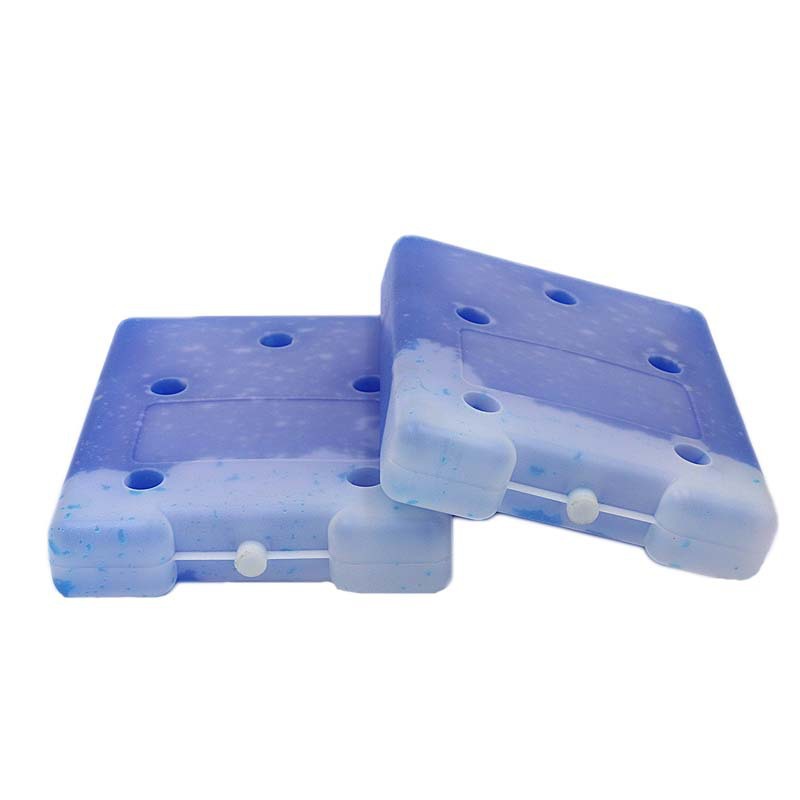
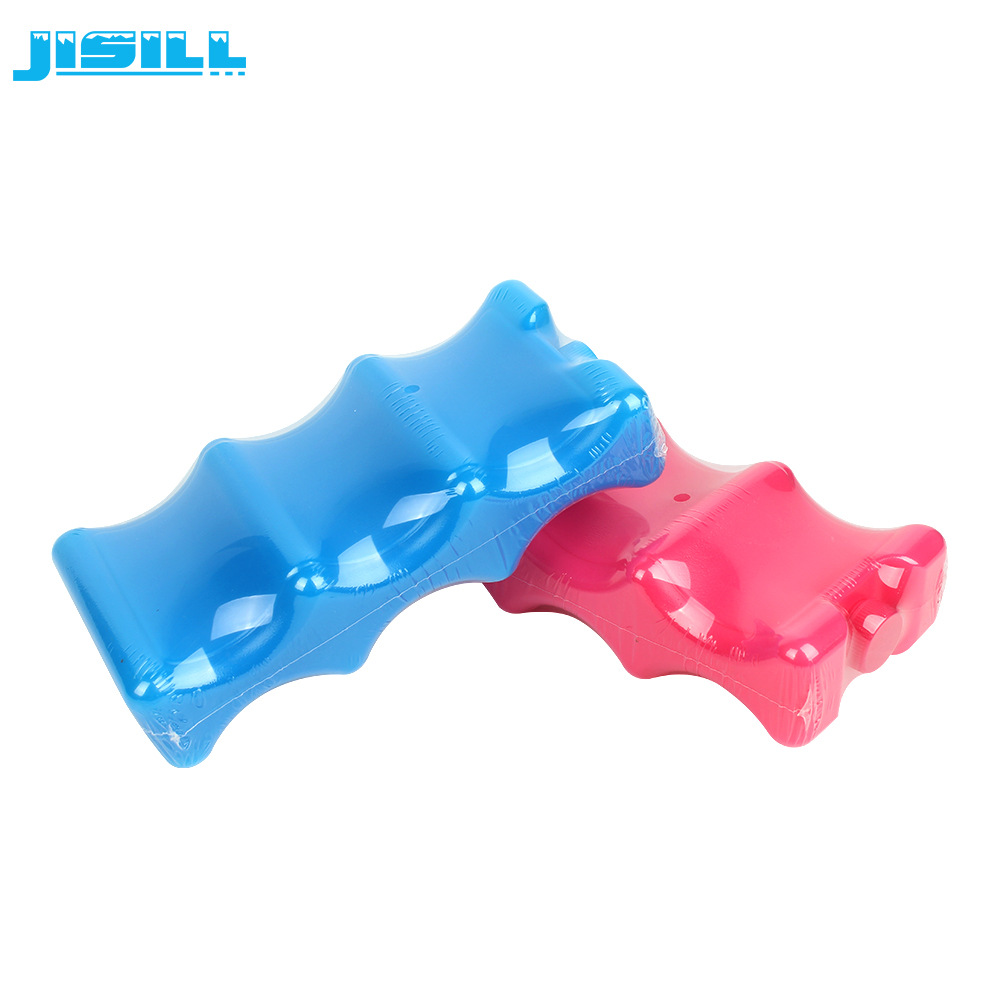
Gel ice packs contain a gel-like substance — typically sodium polyacrylate (SAP) or carboxymethyl cellulose (CMC) — encased in a plastic film or shell. They are flexible, conform to the shape of the cargo, and are widely used in insulated shipping boxes, cool bags, lunch boxes, and medical cool boxes. The gel formulation helps distribute cooling evenly and reduces the risk of direct moisture contact with the product.
Ice Bricks (Ice Blocks / Large Ice Packs)
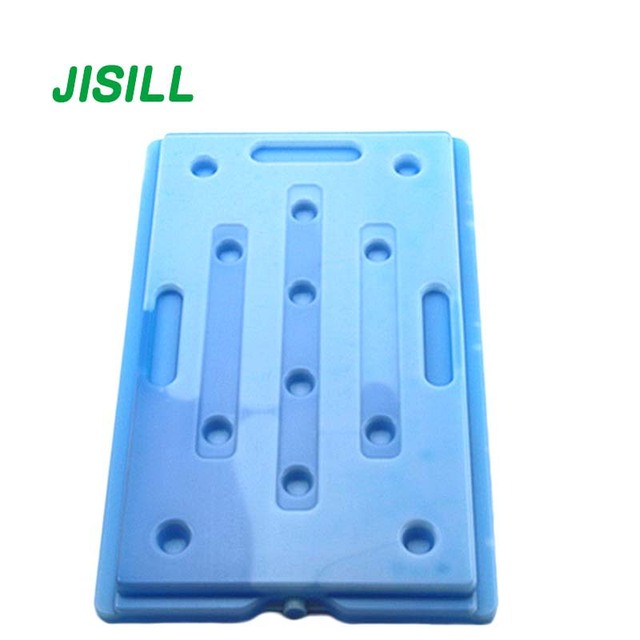
Ice bricks are large-format, rigid or semi-rigid cold packs, often rectangular and designed for high thermal mass. They are commonly used in large coolers, cold chain transportation boxes, and fishing or industrial containers where bulk cooling capacity matters more than flexibility. Some ice bricks use water-based or gel-based fill; some are designed as PCM plates.
The distinction matters because “ice brick” and “gel ice pack” are often used interchangeably in sourcing conversations, but their handling characteristics and temperature profiles differ.
Direct Comparison: Where Ice Bricks Differ from Standard Ice Packs
Compared to standard ice packs, larger-format ice bricks and PCM plates have distinct advantages in specific scenarios. These differences can be grouped into five decision-relevant dimensions:
1. Temperature Range
Standard gel ice packs typically provide a single freezing point (around 0°C), which is suitable for general cooling. Advanced PCM-based ice plates, by contrast, are engineered to phase-change at specific temperatures, including -30°C, -25°C, -15°C, -10°C, -5°C, 0°C, 2–8°C, 18°C, and 23°C. This allows medical cold chain operators to select a plate that holds a stable temperature band rather than one that simply starts frozen and gradually warms.
2. Endurance Time
Ice bricks and PCM plates generally provide longer endurance than thin gel packs due to higher thermal mass. In well-insulated cooler boxes, high-performance ice plates can maintain temperature for 12, 24, 48, 72, 96, or even 120 hours, depending on the ambient temperature, insulation quality, and the specific plate configuration. Standard gel packs are more suitable for shorter-duration shipments.
3. Efficiency and Maintenance
Reusable ice bricks require no maintenance during normal service, are reusable, and have a lower replacement cost over time compared to disposable or short-life cooling methods. In high-volume logistics operations, this efficiency translates into lower per-shipment refrigerant cost — provided the return logistics for reusable packs are managed properly.
4. Cost Difference
For buyers comparing high-performance PCM ice plates against conventional ice packs, the cost difference is an important factor. In some cases, the unit cost of a more advanced ice plate is approximately 10% lower than comparable alternatives when evaluated on a per-shipment endurance basis, though the absolute price depends on size, material, and order volume. Buyers should compare cost per degree-hour, not just unit cost.
5. Best-Fit Applications
Ice bricks and PCM plates are best for logistics transportation and pharmaceutical insulation — scenarios where maintaining a strict temperature window for a defined duration is the priority. Standard gel ice packs remain a practical choice for food cool bags, lunch boxes, breast milk transport, and short-duration consumer use.
| Comparison Dimension | Standard Gel Ice Pack | Ice Brick / PCM Ice Plate |
|---|---|---|
| Primary function | General cooling, flexible contact with products | Stable temperature maintenance for longer durations |
| Typical temperature points | Around 0°C (single freezing point) | From -30°C to +23°C, including 2–8°C medical range |
| Endurance in insulated boxes | Shorter duration (hours, depending on size) | 12h, 24h, 48h, 72h, 96h, even 120h |
| Best-fit use case | Lunch bags, cool bags, breast milk packs, short trips, direct contact cooling | Pharmaceutical logistics, vaccine transport, large cooler boxes, long-haul shipping |
| Maintenance | Reusable, low maintenance | No maintenance required, reusable, lower replacement cost |
| Efficiency | Adequate for short-duration use | Higher efficiency for sustained temperature control |
| Cost consideration | Lower upfront unit cost | Potential ~10% lower cost on an endurance-adjusted basis |
Decision Framework: Which Product Should You Choose?
To make a selection, evaluate the following five factors in order:
- Define your temperature requirement. If you ship products that must remain at 2–8°C, a PCM plate engineered for that range is more appropriate than a standard gel pack that freezes at 0°C.
- Define your shipment duration. For 24-hour local deliveries, a standard gel pack may suffice. For 96-hour international lanes, you need a high-endurance ice plate and an insulated container with corresponding performance.
- Check your container insulation. The same ice brick produces very different endurance in a thin cool bag versus a vacuum-insulated panel (VIP) cooler box. Match the refrigerant to the full packaging system.
- Calculate total lifecycle cost. Include refrigerant unit cost, replacement frequency, reject rate, disposal cost, and shipping weight. A higher-performing plate can lower total cost even if its unit price is higher.
- Verify material compliance. For food and medical contact, confirm that the outer material and inner fill are suitable. Buyer specifications should reference food-grade and medical-grade requirements.
Why This Matters for Medical Cold Chain Buyers
In the health and medicine segment, the global vaccine storage equipment market — including cold boxes and carriers — is projected to grow from USD 0.86 billion in 2024 to USD 1.21 billion by 2029. As more biologics and temperature-sensitive pharmaceuticals enter global distribution, the refrigerant format becomes a critical control point. A standard gel ice pack may be adequate for consumer use, but a PCM ice plate with a defined phase-change point is often the more defensible choice for regulated shipments.
Step-by-Step Selection Process
For a new cold chain project, follow this workflow:
- Profile the shipment. Document the product’s required temperature range, permissible excursion time, and total transit duration.
- Match the phase-change point. Choose a PCM or ice pack whose freezing/phase-change temperature aligns with the product’s requirement — not colder than necessary, because overcooling can damage some biologics.
- Conduct a box-level test. Place the refrigerant inside the actual insulated box with a temperature logger and run a simulated lane test.
- Evaluate reusability logistics. Determine how the packs will be returned, refrozen, and inspected for damage.
- Negotiate with a supplier. Use your test data to set specifications for temperature tolerance, endurance hours, and packaging format.
Use Cases: Matching the Product to the Mission
Use Case 1: Vaccine Carrier — 2–8°C for 72 Hours
For a vaccine outreach program using passive cold boxes, the buyer needs a refrigerant that holds a narrow temperature band. A PCM ice plate conditioned at 2–8°C provides more stable temperature performance than standard frozen gel packs, which start at 0°C and can cause freezing risk on contact. The plate should be paired with a qualified vaccine carrier.
Use Case 2: Large Cooler for Long-Haul Food or Pharma
For a 48-hour truck lane carrying temperature-sensitive foods or pharmaceutical products, large-format ice bricks or PCM plates with high thermal mass are the preferred choice. They maintain temperature longer and reduce the need for mid-route refrigerant replacement.
Use Case 3: Consumer Cool Bag or Lunch Box — 4–8 Hours
For short-duration consumer applications — lunch bags, cool bags, or breast milk transport — standard gel ice packs are more convenient, flexible, and economical. Their flexibility allows them to wrap around food containers, and their lower thermal mass means faster freezing in household freezers.
Use Case 4: Deep-Frozen Shipment — -25°C or Colder
For products requiring deep-freeze conditions, a PCM ice plate with a phase-change point of -25°C or -30°C is required. Standard gel ice packs cannot maintain such low temperatures consistently. The choice of plate must be validated with the box and the actual ambient temperature profile.
Key Capabilities to Look for in a Supplier
When evaluating suppliers for medical cold chain refrigerants, focus on manufacturing capabilities rather than marketing language:
- Multi-temperature PCM capability. The supplier should be able to produce plates at -30°C, -25°C, -15°C, -10°C, -5°C, 0°C, 2–8°C, 18°C, and 23°C to match different cold chain requirements.
- Insulated container integration. A supplier that also manufactures cooler boxes and vacuum insulation panels can provide a complete system, reducing compatibility risk.
- Food-grade / medical-grade materials. Confirm that the outer film and inner fill are non-toxic and suitable for the intended contact level.
- Production capacity. For large-volume rollouts, the factory must be able to meet demand without compromising quality.
- Customization. If you need a specific size, PANTONE color, or printed branding, the supplier should offer flexibility without inflating lead times excessively.
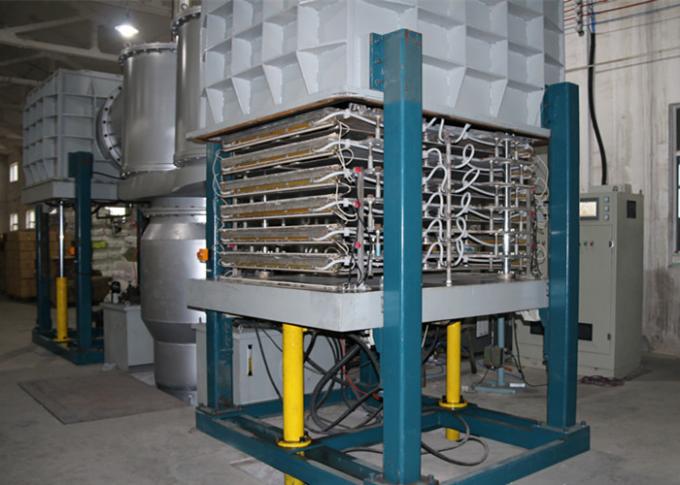
Changzhou Jisi Cold Chain Technology Co., Ltd. is a factory specializing in PCM ice packs, cooler boxes, and VIP panels. Its product range includes PCM ice plates with multiple temperature points, and its cooler boxes use PU or VIP panels to extend duration up to 120 hours. The company was established in 2013 and operates a 40,000 m² facility with an annual output of approximately 620,000 units. Its main export markets include North America, South America, Western Europe, Eastern Europe, Eastern Asia, and Southeast Asia.
Frequently Asked Questions
1. What are the compliance requirements for ice packs used in medical cold chain?
Medical cold chain refrigerants generally need to meet material safety requirements for contact with pharmaceuticals or medical products. This includes non-toxic, food-grade materials where applicable, verified through documentation such as FDA, SGS, and MSDS reports. For vaccine transport specifically, the container system — not just the refrigerant — may need to comply with WHO PQS performance specification E004/VC01.2, which defines standards for vaccine carriers and cold boxes and requires verified “cold life” durations. Buyers should request material certificates and temperature performance data from the supplier before committing.
2. Can an ice brick replace a gel ice pack in a 2–8°C pharmaceutical shipment?
An ice brick or PCM ice plate can replace a gel ice pack if its phase-change temperature matches the required 2–8°C range and the box system has been validated. Standard gel ice packs that freeze at 0°C are not a direct substitute for a 2–8°C PCM plate, because they may cause freezing at the contact surface. For regulated shipments, the entire packaging configuration — refrigerant, box, and loading pattern — must be qualified together.
3. How should a buyer budget for gel ice packs versus ice bricks?
Budgeting should be based on total lifecycle cost, not unit price alone. Consider the refrigerant unit cost, expected number of reuses, replacement rate, rejection due to temperature excursions, and any disposal fees. In endurance-adjusted comparisons, some higher-performance ice plates are about 10% lower in cost than comparable conventional alternatives. For medical cold chain, also factor in compliance risk: a rejected shipment costs far more than the difference in refrigerant price.
4. Can I request free samples of gel ice packs or ice bricks before placing a large order?
Many suppliers provide free samples for existing models without printing, with the buyer paying freight. If you require a custom size, custom color, or printed branding, sample availability may depend on the order quantity — typically, new model development is more feasible for orders above 5,000 pieces. For standard models, minimum order quantity is often around 3,000 pieces, but this varies by supplier. Always request samples and test them in your actual box configuration before committing to volume.
5. What lead time should a buyer expect for a custom ice pack or PCM ice plate order?
Lead times depend on whether the product is an existing model or a new mold. For an existing model with a standard PANTONE color and printing, production is generally faster and MOQ is lower. For a new model requiring mold creation and validation, lead times are longer and MOQ typically starts above 5,000 pieces. Buyers should share their target launch date early and request a written production schedule from the supplier.
Beyond the Comparison: What the Right Product Enables
Selecting the correct refrigerant is not just a sourcing decision — it enables broader cold chain capabilities. With the right PCM ice plate, a buyer can extend shipment duration, reduce the number of temperature excursions, and open new lanes that were previously impossible with standard ice packs. The product is a means to an outcome: compliant, repeatable, cost-effective temperature control.
Compared to ice packs, PCM-based ice plates and high-capacity ice bricks offer distinct advantages when the shipment requires a broader operational temperature range and extended endurance times. The optimal choice depends on your application profile, not on generalized marketing claims.
What Buyers Should Do Next
After mapping your temperature requirements and lane durations, the next step is to test actual products from a qualified supplier. Request samples for your specific cooler box configuration, verify the material documentation, and run a temperature-logged trial. This process converts a paper comparison into a validated procurement decision.
Ready to evaluate PCM ice plates and gel ice packs for your cold chain project?
Contact Changzhou Jisi Cold Chain Technology Co., Ltd. to discuss your temperature requirements, request samples, or receive a quote. For a detailed overview of the product range and factory capabilities, you can also download the company brochure.
Download the Jisi Cold Chain brochure (PDF)
Email: ying@czjmjs.com | Phone: +86 13861230192
Have Questions or Need More Details?
Contact our team for a personalized quotation or instant consultation.
Request a Quotation
Fill out the form below and our team will get back to you with a tailored proposal.
WhatsApp Direct Chat
Prefer to chat in real-time? Message us on WhatsApp for instant assistance & quick answers.
- Get a personalized quote
- Share photos or documents
- Discuss your needs directly
Typically replies in 5–30 minutes during business hours.