
Selecting the Right Gel Ice Packs for Your Cold Chain Project: A Scenario-Based Guide
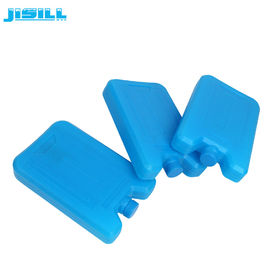
Eco-friendly fan-shaped gel ice pack – suitable for diverse cold chain scenarios.
When procuring gel ice packs for a cold chain project, one size rarely fits all. Whether you are shipping temperature-sensitive pharmaceuticals, fresh food, or vaccines, the choice between standard gel packs, PCM ice plates, ultra-thin bricks, or large cooler ice packs directly impacts thermal performance and operational cost. This guide helps procurement professionals match product specifications to specific project scenarios, drawing on verified data and real-world manufacturing capabilities.
Understanding the Challenge
Many buyers face difficulty translating broad product categories—such as “ice brick” or “cool bag ice packs”—into a working solution for their unique cold chain environment. Key variables include required temperature range, duration of cold retention, packaging dimensions, regulatory compliance, and budget constraints. Without a structured evaluation framework, selecting the wrong type can lead to temperature excursions, product spoilage, or unnecessary cost.
Industry Context
The global reusable ice packs market was valued at approximately USD 1.962 billion in 2024 and is expected to reach USD 2.862 billion by 2035 (Market Research Future). Within this space, the gel ice pack segment alone reached USD 14.56 billion in 2025, driven significantly by pharmaceutical cold chain demands. China accounts for over 11.2% of global gel ice pack revenues (Dataintelo), positioning manufacturers like Jisi Cold Chain—a specialized factory based in Changzhou—as key supply chain partners for international buyers.
How Gel Ice Packs Work in Cold Chain Applications
Gel ice packs operate through passive cooling and require supporting equipment such as insulated containers or cooler bags. They are designed for cold chain transportation environments where consistent temperature maintenance is critical. The product line from Jisi Cold Chain includes gel ice packs with outer materials of HDPE plastic or food-grade nylon PE, and inner materials ranging from SAP/CMC cooling gel to phase change material (PCM). Available temperature points span from -30°C to 23°C, covering applications from frozen food to ambient storage.
Step-by-Step Procurement Framework
- Define temperature requirements. Identify the target temperature range (e.g., 2–8 °C for vaccines, -18 °C for ice cream). Jisi Cold Chain offers PCM ice packs with precise phase change points (e.g., -30, -25, -15, -10, -5, 0, 2–8, 18, 23 °C).
- Calculate volume and space constraints. Determine the internal dimensions of your insulated container. For compact cooler bags, an ultra-thin pack like BH066 (19×12.5×1 cm) fits easily; for larger boxes, a 1000 ml brick (BH084, 33×22.5×2 cm) provides extended cooling.
- Select the ice pack type. Use standard gel packs for general cold chain, PCM plates for precise temperature control, ultra-thin packs for space-limited applications, and large cooler bricks for long-duration shipping.
- Verify certifications. Ensure the product meets regional compliance: FDA, SGS, MSDS, CPSIA, and EU regulations are available across Jisi’s portfolio.
- Assess customization and lead time. Jisi Cold Chain supports OEM/ODM in shape, color, temperature, and logo. Sample delivery takes 2 days; bulk orders 5–10 days depending on quantity (a monthly capacity of 620,000 units supports rapid fulfillment).
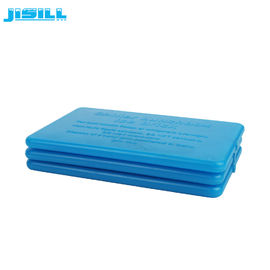
Ultra-thin ice pack (19×12.5×1 cm) – ideal for lunch bags and limited-space coolers.
Real-World Use Cases
Health & Medicine Cold Chain
A logistics and pharmaceutical transportation client in the United States has used Jisi Cold Chain’s phase change material ice plates for over six years, with a total volume exceeding 1,000,000 pieces. The PCM plates, available in temperatures such as 2–8°C, maintain stable temperatures for vaccines and biologics during long-haul distribution. This case demonstrates the reliability required for WHO PQS-compliant vaccine carrier systems (WHO PQS E004/VC01.2).
Food and Beverage Logistics
For food exporters shipping perishables overseas, large cooler ice packs (e.g., BH108, 35×22×3 cm, 1200 g) paired with vacuum-insulated panels (VIP) from Jisi’s cooler box series can sustain temperatures below -20°C for up to 40 hours, as seen in their BWX42L model (42L capacity, VIP+PU foaming).
Daily Use and Retail
Retailers and meal-kit companies often prefer ultra-thin or lunch ice packs for consumer-facing products. Models like BH025 (13.3×12.7×1.3 cm, 160 g) offer food-grade HDPE shells and cooling gel, certified to Regulation(EU) No.102011, ensuring safe storage for packed lunches and meal prep.
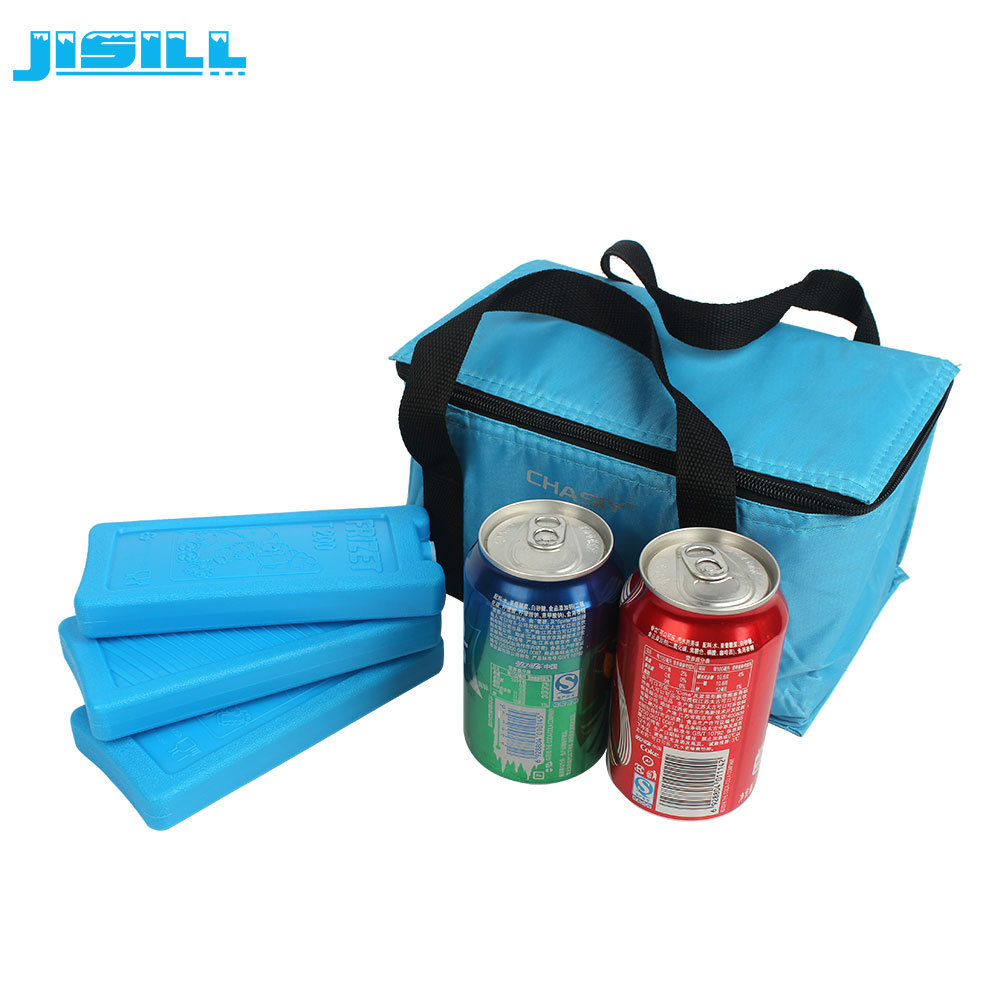
Food-grade mini ice pack in a cooler bag application – a common daily-use scenario.
Comparison Table: Key Gel Ice Pack Types
| Type | Model | Dimensions | Weight / Capacity | Inner Material | Key Certifications |
|---|---|---|---|---|---|
| Standard Gel Pack | BH009 | 16.5×10×2 cm | 200 ml | SAP | FDA, SGS, MSDS, CPSIA |
| PCM Ice Plate | BH142 | 24.5×24.5×2.5 cm | 1200 ml | SAP/CMC/PCM | SGS, FDA, MSDS, CPSIA, LFGB |
| Ultra-Thin Pack | BH066 | 19×12.5×1 cm | 200 ml (est.) | SAP or CMC | FDA, SGS, MSDS, CPSIA, LFGB |
| Large Cooler Brick | BH108 | 35×22×3 cm | 1200 g | SAP/CMC/PCM | FDA, SGS, MSDS, CPSIA, CE |
All values sourced from Jisi Cold Chain product specifications (2026).
Frequently Asked Questions (FAQ)
A: Yes. Jisi Cold Chain’s ice packs carry certifications including FDA, SGS, MSDS, CPSIA, and Regulation(EU) No.102011. Products with PCM inner material also comply with LFGB. The outer HDPE and inner cooling gel or PCM are non-toxic and safe for food and pharmaceutical storage.
A: Yes. Jisi Cold Chain offers OEM/ODM services for shape, temperature point, color (including Pantone matching), size, and logo. PCM plates are available in temperatures from -30°C to 23°C. Minimum order for new molds is typically 5000 pieces; existing models require 3000 pieces.
A: For existing models, MOQ is 3000 pieces. For custom new designs (new molds), the MOQ is usually 5000 pieces or more, depending on complexity.
A: If you accept our existing models and do not require custom printing, we can supply free samples. The freight is to be paid by the buyer.
A: Samples are ready within 2 days. Bulk orders are shipped 5–10 days after order confirmation, depending on quantity. Payment terms: T/T (30% deposit, 70% before shipment), Western Union, or PayPal for small amounts. L/C, D/P, D/A are also accepted for regular clients.
For a tailored quotation or to request samples, please contact Jisi Cold Chain or email ying@czjmjs.com.
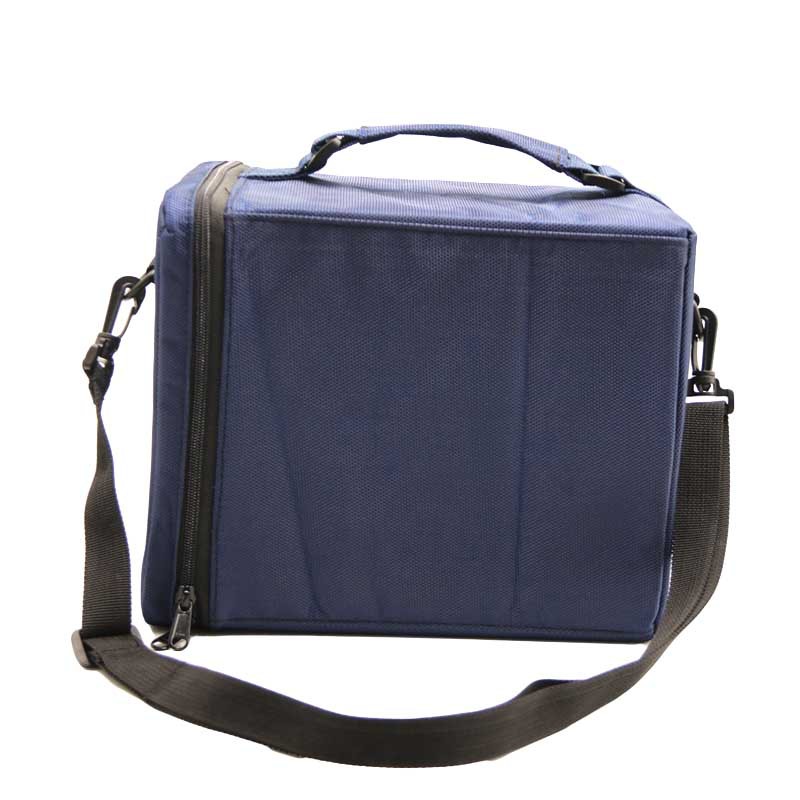
Medical-grade cold chain container with PCM ice plates – typical hospital and laboratory use.
Conclusion
Choosing the right gel ice pack for your cold chain project does not need to be complex. By mapping your temperature requirements, volume, compliance needs, and lead time expectations to the specifications of manufacturers like Jisi Cold Chain, you can reduce risk and optimize supply chain costs. A factory with a 40,000 m² facility, 60 employees, and an annual output of 620,000 units offers the stability and flexibility that global buyers require.
Ready to evaluate the right ice pack for your next project?
Download the company brochure to view the full product range, specifications, and certification details:
Download Jisi Cold Chain Brochure (PDF)Or contact our sales team directly:
Email: ying@czjmjs.com
WhatsApp: +86 13861230192
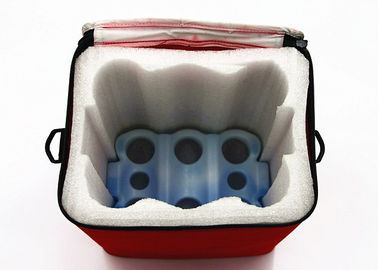
BPA-free breast milk ice pack– demonstrating food-safe materials for sensitive cargo.
Have Questions or Need More Details?
Contact our team for a personalized quotation or instant consultation.
Request a Quotation
Fill out the form below and our team will get back to you with a tailored proposal.
WhatsApp Direct Chat
Prefer to chat in real-time? Message us on WhatsApp for instant assistance & quick answers.
- Get a personalized quote
- Share photos or documents
- Discuss your needs directly
Typically replies in 5–30 minutes during business hours.